by Rick Marin | Sep 28, 2017 | Galatians
What is required in order to become a new creature?
(Galatians 6:11-18; Rom. 6:6; 2 Cor. 5:17) Blog Sep. 24- Oct 5, 2017
Prepared by Richard A. Marin: Present Truth PO Box 700, Fallbrook CA 92088-0700 USA
REVIEW: Paul’s great concern in Galatians is that his converts are being taught that they must add some ritual or good work to faith in the gospel of Christ in order to be justified! The gospel that comes to a person by divine revelation he taught is only about Jesus and what he accomplished on earth. All that Jesus was is credited to the person who believes this gospel. While justification is by faith alone, it produces a lifestyle in harmony the life of Jesus. The reason Paul emphasizes our faith is because it relies on the righteousness of Christ that meets God’s perfect standard. Those who seek God’s acceptance by some other means than faith alone are in slavery for they must render some form of personal obedience in order to be justified by God. We who are justified by faith alone are free from the condemnation of the law for in Christ we have perfectly fulfilled the law and now have motivation, power, and guidance to obey it.
Glorying (Galatians 6:11-14; 3:10; Acts 15:10; Rom. 6:6)
1. What might be the reason Paul wrote Galatians without the use of a scribe?
2. In what did the circumcision party glory?
3. How could advocating and practicing circumcision help one avoid persecution?
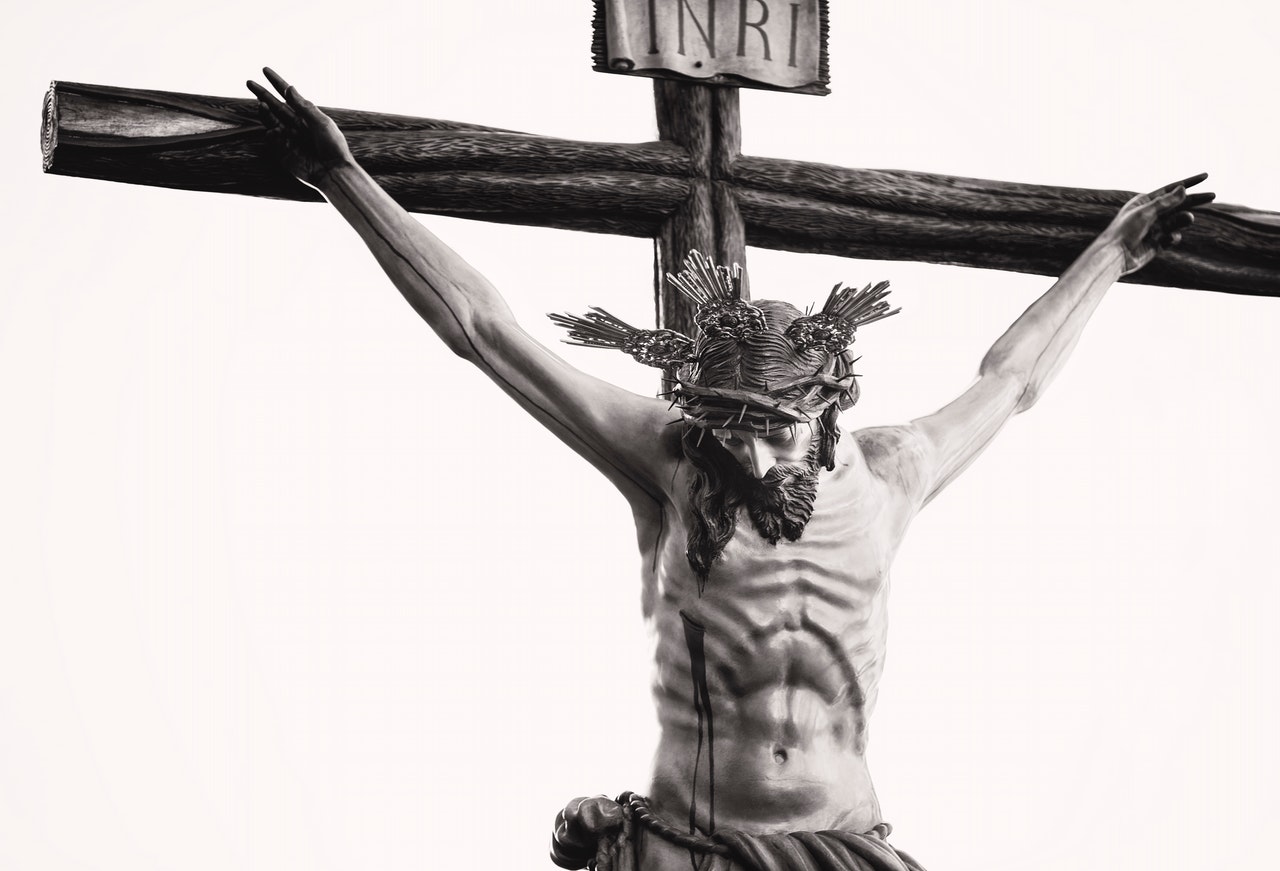
4. What does Paul mean by “the cross of Christ”?
5. Why does the preaching of the cross bring persecution?
6. What does Paul mean when he says that the Judaizers don’t keep the law?
7. Rather than glorying in one’s personal behavior in what does the Christian glory?
8. What is the double crucifixion of which Paul writes in verse 14?
A new creation (Galatians 6:15-16; 3:27; Rom. 2:28-29; 4:11-16; 2 Cor. 5:17)
9. What is required in order to become a new creature?
10. What is Paul saying about circumcision in verse 15?
11. What is the rule of which Paul writes in verse 16?
12. What doctrinal summary of his entire letter does Paul give in verse 16?
13. Why does Paul add “and upon the Israel of God” in verse 16?
From now on (Galatians 6:17-18)
14. What physical marks does Paul bear that his opponents do not have?
15. What divine attribute does Paul desire for his readers that he also wished for them at the start of this letter?
16. What does the cross tell us about God’s justice and about his mercy?
ANSWERS: 1. Because the crisis was urgent & needed immediate attention; 2. The flesh – exterior behavior; 3. Persecution of the early church came from Jews who considered Jewish ceremonies still valid; 4. “The cross” is an abbreviation of “Christ and him crucified,” which is equivalent to saying “the gospel of Christ”; 5. Because to preach the cross means to teach that Christ’s life & death is all that is needed to give a person acceptance with God & this precludes all ceremonies, rituals, & personal performance which are more pleasing to the carnal heart thus bringing persecution from those who seek salvation by something they do; 6. He is pointing out that they just pick & choose which portions of the law of Moses they wish to emphasize rather than obeying its every particular; 7. In Christ’s behavior; 8. The world detests the idea that life comes by death, which is what Paul preached & he was therefore rejected (crucified) by the world & the Christian’s (Paul’s) sinful lifestyle is hung on Christ’s cross to be crucified when he accepts Christ’s life & death as his hope of salvation; 9. To enter Christ by faith alone; 10. That neither being circumcised nor being uncircumsized is any part of the means whereby we enter Christ; 11. The rule is that referred to in the previous verse – that neither our performance nor lack thereof is what justifies us before God but rather upon entering Christ by faith alone we then walk as new creatures performing God’s will; 12. That those who live by this doctrine of “justification by faith alone” will have peace & receive God’s mercy; 13. Because he wants to make exceedingly clear that “the Israel of God” are not Jews according to the flesh nor those who keep the laws of Moses but rather they are those who like their “father” Abraham believe God & are justified by faith alone (the rule given in verse fifteen; 14. Those wounds he received by suffering for the sake of the Gospel; 15. Grace – for God to regard them as better than they really were; 16. The cross tells us that God considers his Ten Commandment Law as supreme making the punishment of sinners necessary while at the same time the cross demonstrates God’s mercy in that he himself took the punishment we deserve opening for us the reward of obedience.

by Rick Marin | Sep 22, 2017 | Galatians
Is justification a one-time event?
(Galatians 5:1-15; Rom. 8:1; Heb. 2:14-15) Blog Sep. 3-9, 2017
Prepared by Richard A. Marin: Present Truth PO Box 700, Fallbrook CA 92088-0700 USA
REVIEW: Peter, Paul, and the first council of the Christian church taught that it was NOT necessary to keep the law of Moses in order to be saved. Some Jewish believers taught the contrary and went about trying to get gentile converts to keep the laws of Moses, especially circumcision. In Galatians Paul presents convincing evidence that obedience to any law will not bring God’s acceptance, not because obedience is bad, but because our obedience isn’t good enough to meet God’s standard. Justification is by faith alone for our faith grasps the righteousness of Christ that is good enough to meet God’s standard. Paul writes that this truth is worth dividing the church over and that those that teach that faith is an insufficient means for receiving God’s acceptance (and God’s Holy Spirit) should be disfellowshipped from the church. They are in slavery for they seek God’s acceptance by their performance. We who are justified by faith alone are free for we are accepted into God’s family in Christ his beloved Son.
Freedom (Galatians 5:1-4; Acts 15:10; Rom. 2:13; 5:1; James 2:10-11)
1. What is the freedom that believers have in Christ?
2. What is the yoke of bondage that all of us were under by nature?
3. Why does Paul say that Christ will be of no benefit to a gentile who gets circumcised?
4. According to verse three what is God’s requirement for acceptance into his family?
5. What happens to those who seek to be justified by their obedience after having once been justified?
6. What about Christ becomes useless if we seek to be justified by our obedience?
7. Is justification a “one time event” or a daily necessity?
Faith (Galatians 5:5-10; Rom. 8:4; James 2:17-18)
8. What kind of righteousness do believers already have and for what kind do they wait?
9. What does Paul mean when he says that circumcision has no value?
10. Is faith the same as love?
11. How were the Galatian believers doing before the judaizers introduced their legalism?
12. Why is heresy so dangerous?
13. Through whom did Paul have confidence that those affected by this heresy would return to the truth?
Flesh (Galatians 5:11-15; Rom. 7:14-25)
14. What is offensive about Paul’s doctrine of the cross and so brings persecution?
15. What is the correct and the incorrect use of our freedom in Christ?
16. According to verse 14 what place does the law have in the Christian life?
17. What does Paul say will happen to the church whose members criticize one another’s actions?
18. What terms does Paul use in these passages to oppose synergism (the combination of two or more things to bring about a desired result)?ANSWERS: 1.The freedom of divine acceptance solely by faith apart from any behavior of their own & free to obey God’s Law with the help of the Holy Spirit; 2. It is the obligation to perfectly fulfill God’s Law in order to be accepted by him & so places all under the condemnation of an unfulfilled law & for the Jews it was the ceremonial law as Peter stated in Acts fifteen; 3. Because circumcision would be a demonstration that Christ’s life & death are insufficient for his justification before God; 4. Perfect obedience to the Law; 5. They fall from grace – lose their justification; 6. Christ’s example is NOT what becomes useless, but rather his vicarious (in our place) substitution becomes useless for we seek to be justified by something other than (or in addition to) Christ’s perfect life & cruel death; 7. Justification begins with an event & continues to be an ongoing daily necessity; 8. Believers already have the imputed righteousness of Christ put to their account in heaven but they wait for their imparted righteousness (the righteousness of the law) to be completed in them at glorification; 9. He is not speaking medically but rather he is saying that ceremonies & rituals cannot place you into Christ nor can they increase your standing before God – rather it is faith that places a person into Christ & being there it is faith that works by love that pleases God, not some ceremony void of faith; 10. No, rather true faith will demonstrate its validity by acts of love; 11. They were running well – living the Christian life as it should be lived; 12. Because it spreads like leaven; 13. The Lord who was working together with Paul; 14. The cross is offensive because it teaches that Christ alone without our help or participation suffered, bled, & died for our salvation& that his offering was a complete atonement for sin, thus excluding our obedience or rituals from the basis or means of our justification before God; 15. The incorrect use is that we use it to serve our sinful desires while the correct use is that we use it to serve others (for we no longer use our energies to be accepted by God – this we are by faith alone; 16. The law tells Christians how they are to love others & how they are to love God; 17. It will destroy itself; 18. “If ye be circumcised, Christ shall profit you nothing,” “he is a debtor to do the whole law,” “Christ is become of no effect unto you,” “For all the law is fulfilled in one word,” by this Paul is saying that God will not accept a mixture of faith & love, nor Christ’s obedience plus your obedience, nor grace plus works as a means nor as a basis for our justification.

by Rick Marin | Sep 20, 2017 | Galatians
What is the law of Christ?
(Galatians 6:1-10; Matt. 18:15-17; Rom. 15:1; John. 13:34; 1 Tim. 6:18) Blog 17-23 Sep., 2017
Prepared by Richard A. Marin: Present Truth PO Box 700, Fallbrook CA 92088-0700 USA
REVIEW: In Galatians Paul teaches that the gospel is about Christ and him crucified, that faith in this gospel brings salvation, that it comes to a person only by divine revelation, that it demands a lifestyle corresponding to the gift of righteousness we receive in Jesus, and that this lifestyle is not part of the means whereby we are justified but rather the fruit of our justification. Our faith grasps the righteousness of Christ that meets God’s perfect standard. This truth is worth dividing the church over and those that teach that faith is an insufficient means for receiving God’s acceptance (and God’s Holy Spirit) should be disfellowshipped from the church. They are in slavery for they seek God’s acceptance by their performance or a portion of it. We who are justified by faith alone are free from the condemnation of the law for in Christ we have perfectly fulfilled the law and now have motivation, power, and guidance to obey it.
Burdens (Galatians 6:1-5; Mat. 18:15-17; Rom. 15:1; John 13:34)
1. Who in the church are spiritual?
2. What does Paul mean by “overtaken in a fault”?
3. What does it mean “to restore such a one”?
4. In what two directions could one be tempted while restoring a faulty brother?
5. What kind of burdens is Paul talking about in verse two?
6. How are we to bear one another’s burdens?
7. What is the law of Christ?
8. What is the difference between verse five and verse two?
9. As we examine our good deeds with whose should we compare them?
10. When will each of us carry our own burdens?
Harvest (Galatians 6:6-10; Hosea 8:7; Rev. 18:6)
11. If someone sows “good seed” in your heart what should be your response?
12. How sure is the harvest God promises?
13. Who will participate in the harvest God promises?
14. What can we learn about the harvest from the word “shall” in verse 7?
15. What can we learn about the harvest from the word “whatsover” in verse 7?
16. What general principle applies to the amount one harvests?
Good Deeds (Galatians 6:9-10; Eze. 18:24; 33:13; Matt. 5:16; Efe. 2:10; 1 Tim. 6:18)
17. How could a Christian lose the harvest of good deeds he has sown?
18. To whom is the Christian to do good deeds?
19. Who first and primarily is to be the object of the Christian’s good deeds?
20. With all Paul’s emphasis on faith in Galatians why is he now talking about good deeds?
ANSWERS: 1.Those who have received the Holy Spirit – true believers; 2. Fallen into some sin; 3. Help them confess & abandon that sin so as to recover the joy of their salvation & the loving fellowship of other church members; 4. To consider oneself better than that person or to join in their sin; 5. Afflictions, weaknesses, perplexities, temptations, persecutions, poverty, sickness, sorrowing, & fearful; 6. Speak words of encouragement or counsel, stand by their side when persecuted, give them aide in their poverty, healing in their sickness, comfort in their sorrow,& guidance in their fears & perplexities; 7. That we love others in the same way Christ has loved us; 8. The tense of the verb; 9. With our own to see how we are advancing or with Christ’s to see how far short we fall, but not with those of other people; 10. In God’s final judgment wher we cannot bear those of another; 11. Share your blessings with them; 12. Very sure; 13. Every human being; 14. That it is future; 15. That it wil be of the same kind as what we sow; 16. One harvests more than he sows; 17. By turning from faith in the righteousness of Christ & trusting in his own righteousness thus turning to iniquity; 18. Everyone; 19. Believers in Jesus; 20. Because good deeds are the fruit of faith & the fruit of the Spirit & he wants us to know exactly what they include so we may abound in them, thus giving glory to God.

by Rick Marin | Sep 13, 2017 | Galatians
What does it mean to “live” in the Spirit?
(Galatians 5:16-25; Rom. 7:14-24) Blog 10-16 Sep., 2017
Prepared by Richard A. Marin: Present Truth PO Box 700, Fallbrook CA 92088-0700 USA
REVIEW: In Galatians Paul warns that there is only one true gospel, that its heart is Christ and him crucified, and that to seek salvation by any other means than by faith alone in this gospel equals the loss of salvation and eternal life. He shows that the gospel comes to a person only by divine revelation, not by human reason, that it demands a lifestyle corresponding to the gift of righteousness we receive in Jesus, and that this lifestyle is not part of the means whereby we are justified but rather the fruit of our justification. Justification is by faith alone for our faith grasps the righteousness of Christ that is good enough to meet God’s perfect standard. This truth is worth dividing the church over and those that teach that faith is an insufficient means for receiving God’s acceptance (and God’s Holy Spirit) should be disfellowshipped from the church. They are in slavery for they seek God’s acceptance by their performance or a portion of it. We who are justified by faith alone are free from the condemnation of the law for in Christ we have perfectly fulfilled the law and now have motivation, power, and guidance to obey it.
Sinful desires (Galatians 5:16-18; Gen. 8:21; Deut. 13:4-5; Rom. 7:14-24; 8:17;)
1. What can we do to help prevent us from fulfilling our sinful desires?
2. How many of us have sinful desires?
3. What does Paul mean when he says “walk in the Spirit”?
4. If Christians have sinful desires, how long will that condition exist?
5. What do our sinful desires prevent us from doing?
6. What is Galatians 5:17 saying?
7. What important function of the Holy Spirit is mentioned in verse 18?
8. What does it mean to be “under the law”?
The works of the flesh (Galatians 5:19-21; 1 Sam. 15:23; Rom. 7:14-24; 16:17-18; Col. 3:5)
9. In general what does the term “works of the flesh” mean?
10. Into what six categories might we lump Paul’s list of works of the flesh?
11. What ideas does Paul include under sexual sin?
12. To what does the prophet Samuel and Paul in Colossians compare idolatry and witchcraft?
13. How many terms does Paul use to describe hatred?
14. How are heresies related to sinful desires?
15. Who does Paul say will not inherit the kingdom of God?
The fruit of the Spirit (Galatians 5:22-25; 4:14 Rom. 6:13-22; 13:10)
16. Which of the fruits of the Spirit encompasses all the rest?
17. If “love” encompasses all the fruits of the Spirit then how do they relate to the Law of God?
18. Why does Paul here exalt obedience to the law when in previous chapters he wrote against the law?
19. If “selfishness” characterizes the works of the flesh what term would characterize the fruits of the Spirit?
20. What have Christians done to their sinful natures?
21. What does it mean to “live” in the Spirit?
22. How can we cause provocation and envy in the church?
ANSWERS: 1.Walk in the Spirit; 2. All of us have them; 3. To direct our lives according to the guidance, inspiration, & power of the Holy Spirit; 4. Until glorification; 5. They prevent us from doing all that we would like to do for God – from giving him the glory he deserves; 6. It is saying that those who have received God’s Spirit by faith then have a battle going on within them in which their sinful natures & the Holy Spirit oppose one another thus hindering their perfect fulfillment of God’s will; 7. That the indwelling Holy Spirit leads & guides Christians so that they make right choices directing their steps in the way of holy living; 8. To e “under the law” means to be under its condemnation because one has not given to God the obedience he deserves; 9. It means to act out our sinful desires; 10. Sexual sin, idolatry, hatred, envy, gluttony,& heresy; 11. Breaking marriage vows, sexual intercourse outside of marriage, impure thoughts, & impure expressions; 12. Samuel compares them to stubborn rebellion & Paul to coveteousness; 13. Seven; 14. Heresies can be a means of exalting oneself, of securing followers whom you can seduce, or of seeking financial gain ; 15. Those who make his list of sinful desires their practice; 16. Love; 17. They are the same as obedience to the Law of God; 18. Because all he wrote against the law & obedience to it was written against obedience to the law as a means of being accepted by God (justification) and of receiving the Holy Spirit while here he shows that those whom God accepts by faith alone are given his Spirit to inspire, guide, & empower them to live in obedience to the law – not now as a means of acceptance but as a fruit of being accepted by God – not as the way to be justified but as the way to thank God for his justification; 19. Self-denial; 20. They have crucified them so that although they remain, they no longer reign in their lives; 21. That we derive our spiritual life from the indwelling Spirit & not from our performance; 22. By exalting ourselves and our ministry (gifts) among the brethren.

by Rick Marin | Sep 1, 2017 | Galatians
What is a covenant?
(Galatians 4:21-31; Gen. 2:15-17; 16:1-6; 21:1-14; Rom. 3:20, 28) Blog Aug. 27- Sep. 2, 2017
Prepared by Richard A. Marin: Present Truth PO Box 700, Fallbrook CA 92088-0700 USA
REVIEW: Paul received by divine revelation the mysteries of the Gospel. After presenting it the the Galatians through physical pain and weakness Jewish brethren came to them teaching that it was necessary to keep the law of Moses in order to be saved. At the first general council of the Christian church Paul’s doctrine of “justification by faith alone” was upheld. In order to meet the heresy of his opposers he wrote the book of Galatians where he emphasizes that there is only one gospel, that one’s lifestyle can negate even their teaching of the true Gospel, that true unity at times demands confrontation, that faith is the sole means of receiving justification, that the gift of the Holy Spirit is also received only by believing, that the Law given at Sinai does not change the promises made to Abraham, that the law which points out sin drives the sinner to Jesus who has met its demands in their behalf, and that those who accept Christ by faith become heirs of God freed from the exactions of the ceremonial law and freed from the obligation to fulfill the moral law in order to be accepted by God – for in Christ’s righteousness they are now accepted.
Two sons (Galatians 4:21-23)
1. Who are the two sons that Paul introduces in verse 22?
2. Who are the two mothers of the two sons that Paul introduces in verse 22?
3. What was the position of each of the two mothers that Paul introduces in verse 22?
4. By what means was each of the two sons of Abraham born?
5. What is the meaning of the important question with which Paul introduces the two sons of Abraham?
Two covenants (Galatians 4:24-28)
6. What is an allegory?
7. What is a covenant?
8. To what mountain does Paul say each of the two mothers corresponds?
9. What two cities do each of the two mothers represent?
10. What kind of children does Hagar produce?
11. What kind of children does Sarah produce?
12. Which of the two women was sterile?
13. Who of us are incapable of producing the obedience that the law requires?
14. To which of the two mothers does Paul say that believers in Jesus correspond and what should that teach us?
Two kinds of children (Galatians 4:4, 29-31; Gen 2:15-17; Rom. 3:20, 28)
15. How did Ishmael treat Isaac and what can we learn from that?
16. Which of the two sons will inherit the promises made to their father Abraham?
17. What does Paul say should be done to those who teach justification by means of personal obedience?
18. What is the essence of each of the two covenants that Paul is illustrating with this allegory?
19. To whom was the covenant of grace not offered?
ANSWERS: 1. Ishmael & Isaac; 2. Hagar & Sarah; 3. Hagar was a slave & Sarah was a freeborn woman; 4. Ishmael was born by means of the flesh & Isaac was born by means of God’s promise; 5. Paul was asking his readers: “You who say that we should be under the obligation to fulfill the law in order to be accepted by God, do you know how much the law demands? – Can you live up to all the requirements of the law in order for God to accept you as his child?; 6. An allegory is an expression of a truth about human experience by means of figures & actions that symbolize that truth; 7. A covenant is an agreement between two parties which binds them together to the fulfillment of certain conditions; 8. Hagar corresponds with Mount Sinai & Sarah corresponds with Mount Zion; 9. Hagar represents Jerusalem in Palestine & Sarah represents heavenly Jerusalem; 10. Hagar produces slave children; 11. Sarah produces freeborn children; 12. Sarah; 13. All of us children of Adam; 14. We who believe are likened to children of Sarah who produced Isaac by means of God’s powerful promise for when we are born into God’s family we are born free from the condemnation of the law & free from the obligation to perfectly fulfill it in order to be accepted by God – in future chapters Paul will go on to show that we who enjoy this freedom are the only ones who can obey God’s law; 15. Ishmael made fun of Isaac & persecuted him so in Paul’s day & in ours those who teach that acceptance with God (justification) is by means of at least some particle of obedience make fun of & persecute those who teach that our acceptance with God is by faith alone entirely apart from our obedience; 16. Only the one that was born under the covenant of promise & not the one born by means of human activity; 17. They should be “cast out,” disfellowshipped from church membership; 18. The Sinai covenant says that “if you obey God will give you life” while the Abrahamic covenant says “God will give you life so that you may obey”; 19. To Adam & Eve before their fall & to Jesus who was made under the law, under the obligation to perfectly fulfill it in order to be accepted by God.
