
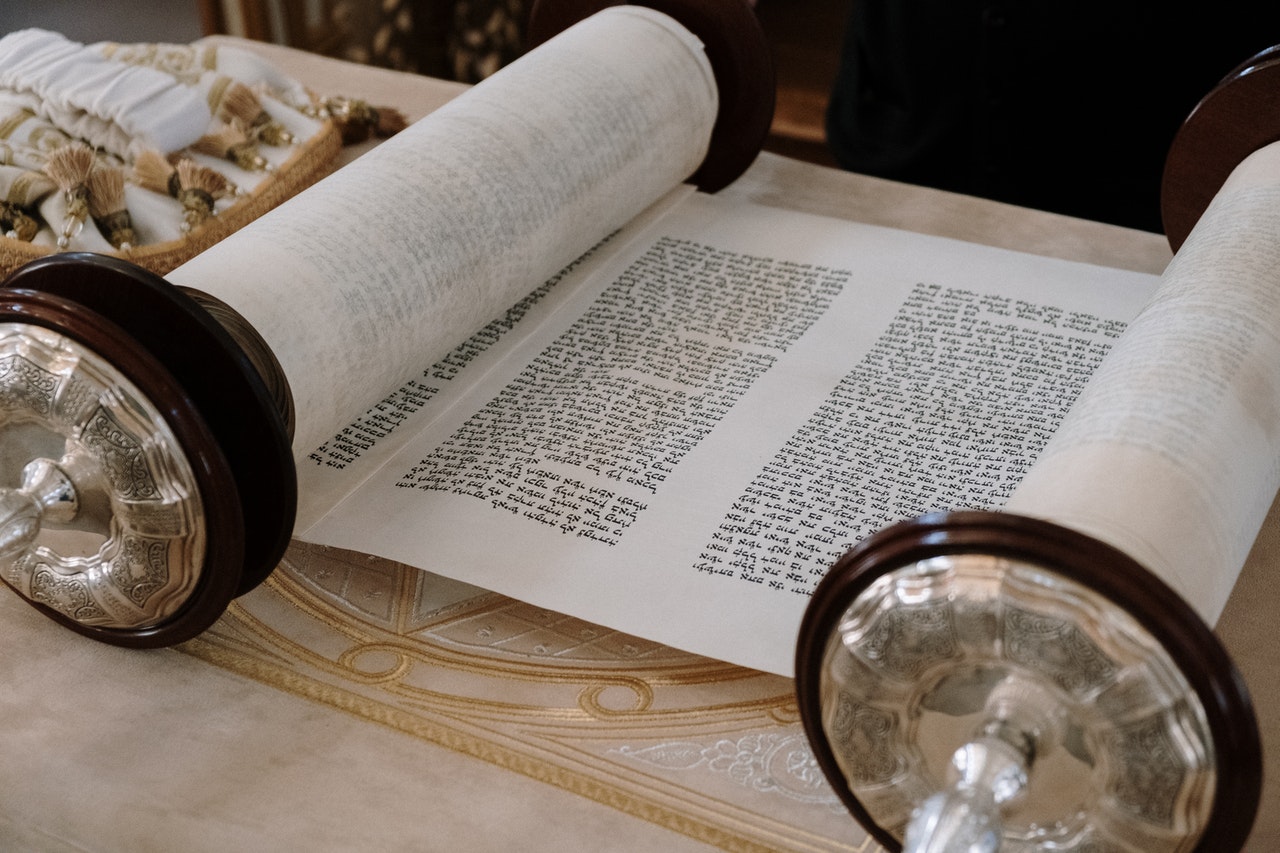
What is a covenant?
(Galatians 4:21-31; Gen. 2:15-17; 16:1-6; 21:1-14; Rom. 3:20, 28) Blog Aug. 27- Sep. 2, 2017
Prepared by Richard A. Marin: Present Truth PO Box 700, Fallbrook CA 92088-0700 USA
REVIEW: Paul received by divine revelation the mysteries of the Gospel. After presenting it the the Galatians through physical pain and weakness Jewish brethren came to them teaching that it was necessary to keep the law of Moses in order to be saved. At the first general council of the Christian church Paul’s doctrine of “justification by faith alone” was upheld. In order to meet the heresy of his opposers he wrote the book of Galatians where he emphasizes that there is only one gospel, that one’s lifestyle can negate even their teaching of the true Gospel, that true unity at times demands confrontation, that faith is the sole means of receiving justification, that the gift of the Holy Spirit is also received only by believing, that the Law given at Sinai does not change the promises made to Abraham, that the law which points out sin drives the sinner to Jesus who has met its demands in their behalf, and that those who accept Christ by faith become heirs of God freed from the exactions of the ceremonial law and freed from the obligation to fulfill the moral law in order to be accepted by God – for in Christ’s righteousness they are now accepted.
Two sons (Galatians 4:21-23)
1. Who are the two sons that Paul introduces in verse 22?
2. Who are the two mothers of the two sons that Paul introduces in verse 22?
3. What was the position of each of the two mothers that Paul introduces in verse 22?
4. By what means was each of the two sons of Abraham born?
5. What is the meaning of the important question with which Paul introduces the two sons of Abraham?
Two covenants (Galatians 4:24-28)
6. What is an allegory?
7. What is a covenant?
8. To what mountain does Paul say each of the two mothers corresponds?
9. What two cities do each of the two mothers represent?
10. What kind of children does Hagar produce?
11. What kind of children does Sarah produce?
12. Which of the two women was sterile?
13. Who of us are incapable of producing the obedience that the law requires?
14. To which of the two mothers does Paul say that believers in Jesus correspond and what should that teach us?
Two kinds of children (Galatians 4:4, 29-31; Gen 2:15-17; Rom. 3:20, 28)
15. How did Ishmael treat Isaac and what can we learn from that?
16. Which of the two sons will inherit the promises made to their father Abraham?
17. What does Paul say should be done to those who teach justification by means of personal obedience?
18. What is the essence of each of the two covenants that Paul is illustrating with this allegory?
19. To whom was the covenant of grace not offered?
ANSWERS: 1. Ishmael & Isaac; 2. Hagar & Sarah; 3. Hagar was a slave & Sarah was a freeborn woman; 4. Ishmael was born by means of the flesh & Isaac was born by means of God’s promise; 5. Paul was asking his readers: “You who say that we should be under the obligation to fulfill the law in order to be accepted by God, do you know how much the law demands? – Can you live up to all the requirements of the law in order for God to accept you as his child?; 6. An allegory is an expression of a truth about human experience by means of figures & actions that symbolize that truth; 7. A covenant is an agreement between two parties which binds them together to the fulfillment of certain conditions; 8. Hagar corresponds with Mount Sinai & Sarah corresponds with Mount Zion; 9. Hagar represents Jerusalem in Palestine & Sarah represents heavenly Jerusalem; 10. Hagar produces slave children; 11. Sarah produces freeborn children; 12. Sarah; 13. All of us children of Adam; 14. We who believe are likened to children of Sarah who produced Isaac by means of God’s powerful promise for when we are born into God’s family we are born free from the condemnation of the law & free from the obligation to perfectly fulfill it in order to be accepted by God – in future chapters Paul will go on to show that we who enjoy this freedom are the only ones who can obey God’s law; 15. Ishmael made fun of Isaac & persecuted him so in Paul’s day & in ours those who teach that acceptance with God (justification) is by means of at least some particle of obedience make fun of & persecute those who teach that our acceptance with God is by faith alone entirely apart from our obedience; 16. Only the one that was born under the covenant of promise & not the one born by means of human activity; 17. They should be “cast out,” disfellowshipped from church membership; 18. The Sinai covenant says that “if you obey God will give you life” while the Abrahamic covenant says “God will give you life so that you may obey”; 19. To Adam & Eve before their fall & to Jesus who was made under the law, under the obligation to perfectly fulfill it in order to be accepted by God.