
by Rick Marin | Mar 25, 2020 | The Book of Daniel
What must we do to receive the seal of the Living God?
(Daniel 12:1-13; Eph. 2:15; 1 Tim. 5:24; Rev. 1:7; 13:5; 14:13; 22:11) Blog 22-28 Mar. 2020
Prepared by Richard A. Marin: Present Truth PO Box 700, Fallbrook CA 92088-0700 USA
REVIEW: In Daniel we learned that God plans to restore his lost dominion, king, sanctuary, and people on earth; that the Bible must be its own interpreter if we are to properly understand the book; and that God’s plan of operation with humanity is “time, test, results.” The restoration of God’s kingdom on earth will come only through crisis and divine intervention (“the big bang” test).
Daniel’s four prophetic outlines build upon each other, teaching us that from the prophet’s time four world empires would emerge followed by ten kings, followed by a blasphemous “little horn,” followed by an atheistic regime, and a renewed king of the north that will attempt to avert the “crisis and deliverance” plan of God.
Chapter ten revealed the nature of the “big bang” restoration, which is Jesus as high priest interceding for his people on judgment day. This he can only do because, as Prince of the everlasting covenant, he fulfilled the six requirements given Daniel 9:24 by living a perfect human life and dying an atoning death for our sins.
The Time of the “Big Bang” (Daniel 12:1-4; Prov. 11:30; Rom. 8:17-18; Eph. 2:15; Heb. 2:10; Rev. 13:8)
1. When does Michael stand up for the deliverance of God’s people? When the new king of the North (American Pentecostalism) plants its temple in the Holy Place between the Lavar & the Most Holy Place (Mt Zion, where God’s people must enter to receive the blotting out of their sins & the seal of God Rev. 7)
2. What event comes with Michael’s “standing up”? A time of trouble worse than any previous one.
3. Who will be delivered at that final time of trouble? All God’s people whose names remain in the book of life.
4. Who wrote the book of life and what does it contain? Jesus wrote it for it is the book of the life of the Lamb, a record of his perfect life & atoning death on earth & all who are in him by faith are included.
5. What is Daniel 12:2 talking about? It tells of a special resurrection in which those who died believing the messages of Revelation 14:6-12 (see v. 13) together with Christ’s vilest persecutors (Matt. 26:64; Rev. 1:7) will be raised at the voice of God (Rev. 16:17) to see Christ coming in the clouds of glory.
6. At the time of the special resurrection what do God’s people receive according to verse 3? Glorification, making them shine as the stars for eternity.
7. When does Gabriel tell Daniel that his prophesies will be unsealed and widely proclaimed? At the time of the end, 1798 forward.
The Man upon the Water (Daniel 12:5-10; 7:25; Eccl. 12:13-14; Rev. 22:11; )
8. Who else besides Jesus appears to Daniel at the Hiddekel River? Two other persons; probably the Father & the Holy Spirit.
9. Why did Jesus raise his hands while stating the facts contained here? Because he was making a covenant oath in the name of the Everlasting Father that the time prophesies contained in this book had only one unchangeable application.
10. When asked “How long shall be the end of these wonders?” what did Jesus reply? That the 1260 years of Papal supremacy must be fulfilled & then all these things would take place.
11. When applying the 1260-day symbol consistently what else can we learn about this period? That God’s two witnesses prophesy in sackcloth during this time (Rev. 11:3); that the New Testament church like Elijah is fed in the wilderness (Rev. 12:6); & that the beast of Revelation 13 reigns for this period (see v. 5).
12. What did Daniel ask when perplexed by Jesus answer? “What [not when] shall be the end of these things?”
13. Despite saying that these things were sealed until the time of the end, what event did Jesus point to as the conclusion of the whole matter? God’s final judgment decision that separates the righteous & the wicked (the “big bang” in each of Daniel’s stories & prophesies).
14. What New Testament passage parallels Daniel 12:10? And what does it mean? Revelation 22:11 that shows how God’s final judgment will irrevocably determine the cases of all & that there will be only two classes – the righteous & the wicked.
The Man Dressed in Linen Concludes (Daniel 12:11-13; 8:11-14; Psa. 7:8; Eccl. 9:5-6; 1 Tim. 5:24)
15. How are we to understand the time period of 1290 days in verse 11? That is the number of years from the taking down from heaven the ministry of Jesus in forgiving sins & the setting up of “the abomination of desolation” (placing forgiveness in the hands of earthly priests) (508 AD) until the time of the end (1798 AD).
16. How are we to understand the time period of 1335 days in verse 12? That is the number of years from the setting up of “the abomination of desolation” (508 AD) until the time for God’s final judgment & the heavenly sanctuary to be cleansed (1843 AD)
17. What is Daniel told in verse 13? That he will rest in the tomb until his resurrection when he will be given the crown of everlasting life (there is no intermediate life of the soul in heaven but rather the dead rest in the grave) & that his prophecies will have their desired effect in the last days.
18. Since we are now living in the time of God’s final judgment that offers the blotting out of our forgiven sins, what must we do to receive the seal of the Living God? We must follow Jesus by faith into heaven’s Most Holy Place, praying “Judge me, Oh God,” while depending like Daniel on the mercy of God & sending our sins beforehand to judgment through fervent prayer.
by Rick Marin | Mar 18, 2020 | The Book of Daniel
In Daniel 11:36 what anti-God power arises?
(Daniel 11:29-45; Rev. 11:7-12) Blog Mar. 15-21, 2020
Prepared by
Richard A. Marin: Present Truth PO
Box 700, Fallbrook CA 92088-0700 USA
REVIEW: In
the first chapter of Daniel we learned the order in which divine restoration
would be explained: kingdom, king, sanctuary, people. We also learned
that the Bible is to be its own interpreter and that God deals with
humanity giving them time, test, and results. In chapters 2-6 we
learned the order of events to take place from Daniel’s day until the
restoration of God’s kingdom on earth and that this restoration would take
place only through crisis and divine intervention. In chapter 7 a
blasphemous power was added that would follow the four world empires and their
division into “ten.” In chapters 8-9 the second and third world empires were
identified and we were given a 2300-day prophecy that can only be calculated
from the cross of Christ. Chapter ten revealed the nature of the “big bang”
restoration, which is Jesus as high priest interceding for his people on
judgment day. In chapter 11 we noted the phrase “do according to his will” as
introducing a new world empire and that the cross of Christ in verse 22 divides
Gabriel’s narrative between events that take place before the cross and those
that take place after the cross.
The Little Horn in History (Dan. 11:29-35; Matt.
24:15; 2 Thes. 2:1-10; Rev. 3:1-6; 13:1-10)
1. At what time did the corruptions entering
God’s church outweigh the positive progress being made by her? 394 AD.
2. What is taking place in Daniel 11:29 -30? Constantine’s
“Christianity” once again approaches Arian Alexandria but loses its sovereignty
to the ten barbarous nations of Europe (Chittim).
3. What power in verse 30 now takes control of
the European nations that defeated Rome? The “little horn” (the Papacy)
who thinks to change God’s covenant (the Ten Commandments).
4. What is verse 31 telling us? That “arms”
(troops) are set up on earth to replace Christ’s daily ministry of the
forgiveness of sins in heaven. In other words “the abomination of desolation”
is the human, priestly confessional.
5. How did the Papacy use “flatteries” to
replace the grace of God? By selling “indulgences” for the forgiveness of sins
& relief from purgatory.
6. Who especially qualified for the designation
“the people that do know their God shall be strong, and do exploits? Wycliffe,
Huss, Jerome, Luther, Melanchthon, Zwingli, Calvin, & the other Reformers.
7. What was the fate of God’s wise servants that
instructed many in the paths of righteousness during the Middle Ages? They
suffered the sword, the stake, imprisonment, & confiscation of goods &
property for a long time (remember “the inquisition.”
8. As the Protestant Reformation became more
popular (during the time of the Sardis church) what led many to join its ranks?
The hope of political or financial gain (“flatteries”), state religion, &
parents.
9. To what appointed time does Daniel 11:35
point? To the end of the reign of the “little horn” – the end of the 1260 years
of Papal supremacy foretold in Daniel 7:25.
The Modern King of the South (Daniel
11:36-40; Rev. 11:7-12)
10. In verse 36 what anti-God power arises that
gives a “deadly wound” to the Papacy and introduces a world view of “might
makes right”? The French Revolution & it’s ensuing atheistic communism.
11. What are we to learn from verse 37? That this
new world-dominating ideology will not regard God, the Father; nor God, the Son
(the “desire of women”); nor any god for it will place human reason & power
(humanism) above every god.
12. To what “god” (v. 38) did the French
Revolution (and her heirs) give honor and special tribute? To the “Goddess of
Reason” – the power of human mind and strength.
13. How did the French Revolution and atheistic
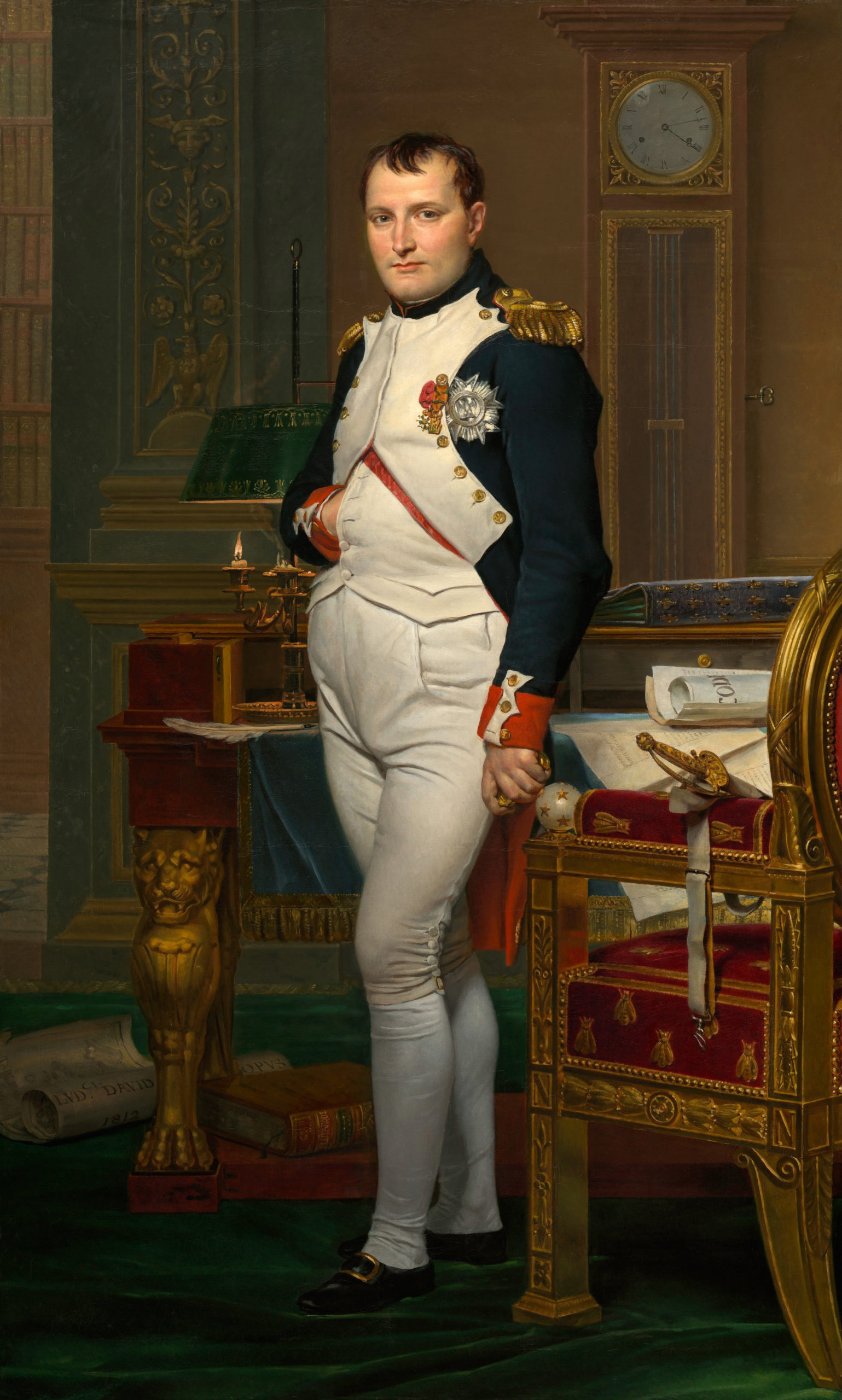
communism fulfill verse 39? They gave honor to military might (like Napoleon)
& took property from the church & wealthy landowners & gave it to
the state.
14. What method of world domination did
Communism (the new king of the South) use to conquer Catholic nations and even
the United States? She used a gradual, little by little, “pushing” technique
that brought victory in Viet Nam, liberation theology among the Latin clergy,
& atheistic humanism to North American universities.
A New King of the North (Daniel
11:40-45; Rev. 13:11-18)
15. What does verse 40 picture the new king of
the North as doing? It shows a dramatic attack against Communism using
political, economic, & religious power to bring Communism to its knees
(remember the Berlin Wall 1989).
16. What method does Revelation 13 say this same
new king of the North will especially use to bring conformity to its ideology?
Embargos (buy & sell decrees).
17. What movement in our day embodies a return
to Roman Catholic legalism and has entered God’s true church (the glorious
land) as verse 41 states? The Neo Pentecostal, charismatic movement.
18. Who do Edom, Moab, and the children of Ammon
represent? They are relatives of God’s people who apparently maintain their
humanistic antinomian ideas (those of the king of the South) rather than bowing
to the legalism of the Charismatic movement.
19. What does Egypt represent over whom the new
king of the North (North American Pentecostalism) will have financial power?
Egypt represents the king of the South (atheistic communism [China, Cuba, Russia]).
20. What are the tidings that terrorize North
American Pentecostalism? The news that God is judging in favor of his people
(Dan. 7) that by faith enter heaven’s Most Holy Place (sides of the North)
& sealing them with the seal of the Living God (Rev. 7) by the angel that
comes from the East (Ezeq. 9).
21. Where does Pentecostalism (in union with
revived Catholicism) place its emphasis (“tabernacle”) in order to prevent
humanity from entering “the glorious holy mountain” (Mt Zion = heaven’s Most
Holy Place) there to receive the seal of God & be protected from the seven
last plagues? Between the masses of humanity (seas) & the truth of the “big
bang” that offers Daniel’s great vision of Jesus as High Priest Mediator &
Judge (likely an emphasis on sanctified living as our hope of eternal life
rather than the blotting out of sins that is to be accomplished for those who
lift their eyes to behold the “great vision.”.
by Rick Marin | Mar 12, 2020 | The Book of Daniel
Who is the covenant (league) maker in Daniel 11:23?
(Daniel 11:1-28; Isa. 9:15; Dan. 7:22-25; Matt. 2;13-16; John 12:31) Blog Mar. 8-14, 2020
Prepared by
Richard A. Marin: Present Truth PO
Box 700, Fallbrook CA 92088-0700 USA
REVIEW: In
the first chapter of Daniel we learned three basic principles necessary to a
proper understanding of this apocalyptic book. They were the principles of explanation,
interpretation, and operation. Then as we began the primary level
education in chapters 2-6 we learned through simple math and pointed stories
the order of events to take place from Daniel’s day until the restoration of
God’s kingdom on earth and that this restoration would take place only through
crisis and divine intervention. Our secondary level education (chapter 7)
taught us that a blasphemous “little horn” power would follow the four world
empires and their division into “ten” and would dominate humanity for 1260
years before restoration would take place. At college-level (chapters 8-9) the second and
third world empires were identified and besides being given more details about
the “little horn” we were give a longer time prophecy that was to occur before
restoration and it included date markers as determined by the cross of Christ. Now
at university-level (10-12), chapter ten revealed the nature of the “big bang”
restoration, which is Jesus as high priest interceding for his people on
judgment day.
Battles over God’s People (Daniel
11:1-15; 8:4, 12; 10:14; Esther 1:1-8)
1. What is the center of attention in Daniel 11?
God’s people.
2. Who was the fourth Persian king that was very
rich? Ahasuerus (Xerxes) who married Esther.
3. What phrase indicating the entrance of a new world
empire appears repeatedly in Daniel 11? “Do according to his will.”
4. Since we have learned that each of Daniel’s
four prophetic outlines follows a “1, 2, 3, 4, 10, little horn, bang” sequence
and the first three have already been identified, what world power is
introduced in Daniel 11:3? Greece.
5. When Greece’ first king died who took over
the kingdom? Alexander’s four generals: Seleucus, Casander, Ptolemy, &
Lysimanus.
6. Why does the narrative continue talking about
only two of the sectors of Greece? Because they were the two powerful ones who
invaded Israel – one from the north (the Seleucid dynasty) & one from the
south (The Ptolemy dynasty).
7. How has history proven the accuracy of
Gabriel’s prophetic narrative? Ptolemy II gave his daughter Bernice as wife to Antiochus
II Theos whose first wife, Laodice, then murdered her competition & husband
just as verses 7-9 foretell.
8. Who are “the robbers of thy people” in verse
14 that think they are the fulfillment of Daniel 8:14, but are not? The Maccabees.
The Covenant Prince invades humanity (Daniel
11:16-22; Lk. 2:1; 3:1-2)
9. According to what we have learned so far in
Daniel, what world empire emerges in verse 16? The fourth.
10. When the fourth empire emerges what is the
“glorious land” over which he takes control? Israel, the land of God’s people,
& not without reason for the Maccabees had made alliance with this nation
in their effort to eliminate Antiochus Epiphanes.
11. Does the Bible identify the “raiser of
taxes” mentioned in verse 20? Yes, in Luke 2:1, Augustus Caesar is this “raiser
of taxes,” thus giving us the identity of the fourth world empire as Rome.
12. Now, finally in Daniel 11, knowing what the
fourth world empire is, can we easily identify its leaders? Yes, Julius Caesar
appears in the verses preceding verse 20 & Tiberius Caesar is the “vile
person” who appears in verses 21 & 22.
13. Who is the “prince of the covenant” that was
killed under the rule of Tiberius Caesar? Jesus Christ, the Prince that
confirms the covenant according to Daniel 9:27, & is “Michael, Daniel’s
Prince”.
The Early Church (Daniel 11:23-28; Lk. 12:32; Acts
15:11; Rom. 15:19; 2 Cor. 6:8; Rev. 6:2)
14. Who is the covenant (league) maker in verse
23 that “shall become strong with a small people”? It is Jesus who deceived the
Roman soldiers & Jewish leaders (who called him a deceiver & Paul uses
the term) by “coming up” alive from Joseph’s tomb & went forth “conquering
and to conquer” using his “little flock.”
15. What are we to understand from the
expression “he shall scatter among them the prey, and spoil, and riches”? That
Jesus, upon his ascension, poured out the booty of his victory by imputing his
righteousness & imparting his Holy Spirit to his followers.
16. According to Daniel 11:24, how long would
the early church continue to make progress against the “strong holds” of Satan
in the peaceful Roman empire? For “a time (1 year)” prophetically 360 years.
17. If we begin the 360 years of church
advancement from the end of Daniel’s “70 weeks” to what date do we arrive? 394
AD.
18. What were the significant accomplishments of
the early church between 34 AD and 394 AD? The Jerusalem Counsel settled the
doctrine of “justification by faith alone,” Paul & the other apostles
carried the Gospel to the then known world, at the Counsel of Nicaea (325 AD)
Christ was acknowledged to be of the same substance & fully equal with the
Father, at the Counsel of Chalcedon (381 AD), the person of Holy Spirit was
acknowledged to be of the same substance & fully equal with the Father
& the Son, at the Synod of Hippo (394 AD) the 66 books of the Holy Canon
were acknowledged & accepted (it was that same year that the Catholic mass
was adopted & only a year later Agustin (the designer of the church as the
“city of God” was consecrated Bishop of Hippo.
19. What religious controversy is pictured in
Daniel 11:25? Jesus, through the early church, “stirred up his power and his
courage against” the Arian, allegorical, & gnostic ideas prevalent in
Alexandria, Egypt (these ideas represent the new “king of the south” who will
morph into Nicolaitan antinomianism) & at the Counsel of Nicaea the more
powerful Arians were defeated because of internal intrigue (v. 26) & the
imposition of Constantine from Rome who supported the anti-Arian, Roman bishops
(& who’s legalism would become the new “king of the north” — the political
intrigue between these two new kings (v. 27) did not deter the progress of the
church, for the AD 394 “time appointed” was still future.
20. What power is pictured as taking rule over
God’s people in Daniel 11:28? Constantin’s “Christianity” returns home
triumphant & establishes itself in opposition to God’s Law (covenant).

by Rick Marin | Mar 8, 2020 | The Book of Daniel
What is the meaning of the vision Daniel saw beside the Hiddekel River?
(Daniel 10:1-21; Lev. 16:29-31; Revelation 1:13–16) Blog Mar. 01-07, 2020
Prepared by
Richard A. Marin: Present Truth PO
Box 700, Fallbrook CA 92088-0700 USA
REVIEW: In
the first chapter of Daniel we learned three basic principles necessary to a
proper understanding of this apocalyptic book. They were the principles of explanation,
interpretation, and operation. Then as we began the primary level
education in chapters 2-6 we learned through simple math and pointed stories
the order of events to take place from Daniel’s day until the restoration of
God’s kingdom on earth and that this restoration would take place only through
crisis and divine intervention. Our secondary level education (chapter 7)
taught us that a blasphemous “little horn” power would follow the four world
empires and their division into “ten” and would dominate humanity for 1260
years before restoration would take place.
At college-level (chapters 8-9) the second and third world empires were
identified and besides being given more details about the “little horn” we were
give a longer time prophecy that was to occur before restoration and it
included date markers as determined by the cross of Christ. Now at
university-level (1-12), chapter ten revealed the nature of the “big bang”
restoration, which is Jesus as high priest interceding for his people on
judgment day.
Prelude to Understanding (Daniel
10:1-4; Lev. 16:29-31)
1. What two things were revealed to Daniel in
the third year of the reign of Cyrus? A “thing” & a vision.
2. What was the “thing”? The true, long-lasting
conflict over God’s people given in chapters 11 & 12.
3. What was the vision? The appearance of “a
certain man” as given in verses 5 & 6.
4. Did Daniel understand both the “thing” and
the vision? Yes, now at university level teaching Daniel understands God’s plan
for restoration of his kingdom, king, sanctuary & people.
5. What was Daniel doing during the first month
of the third year of the reign of King Cyrus? He was fasting & afflicting
his soul.
6. Why wasn’t Daniel joyfully celebrating
Passover and the feast of unleavened bread during the first month? Because there
were still things he didn’t understand about the liberation of God’s people
& the threat of earthly rulers hindering God’s plan so he took the posture
of preparation for the Day of Atonement.
The Great Vision (Daniel
10:5-9; Isa. 6:1-7; Lk. 8:9; Rev. 1:13-16; 6:15-16)
7. What brought the “great vision” to Daniel? He
lifted up his eye of faith to God while humbling himself.
8. What was the great vision that Daniel saw
beside the Hiddekel River? He saw a “certain man” clothed in linen with a
golden sash around his waist, a body like beryl, a face like lightning, eyes
like lamps of fire, & arms & feet the color of polished brass.
9. What is the meaning of the vision Daniel saw
beside the Hiddekel River? The “certain man” is Jesus as High Priest clothed
for the Day of Atonement; with a golden sash representing his perfect character;
beryl, like the wheels of God’s throne, showing that he can move into any life;
a face like lightning that reveals everything as far as the East is from the
West; eyes like lamps of fire that illuminate every hidden thought, word, &
motive of our lives; arms & feet the color of polished brass showing that
he lived as a degenerate human in the outer court of this earth (also recorded
in the first chapter of Revelation).
10. How did Daniel’s companions react to the
coming of Christ in judgment? They greatly feared, fled, & hid themselves.
11. Under the sixth seal in Revelation what
brings a reaction like that of Daniel’s companions? The coming of God’s great,
shaking, final judgment.
12. How did Daniel react to the vision of Christ
coming in judgment? He fainted, realized the corruption of his nature, &
lost all strength.
13. Name two other Bible characters that had similar
reactions when beholding the divine Jesus: Isaiah in the temple & Peter
with the great catch of fish.
Face to Face with Michael (Dan. 10:10-21; Isa. 14:12; Rev.
12:7)
14. What hindered the mighty angel Gabriel from
coming immediately to Daniel’s aide? The opposition of the “prince of the
kingdom of Persia.
15. To who only must “the prince of the kingdom
of Persia” refer? To Lucifer, for he is the highest created angel, he opposes
the Angel of the Lord” in judgment according to Zechariah 3:1; & he is
mightier than Gabriel.
16. To who only must “Michael” refer? To Jesus,
for he is the Archangel that defeated Satan & his angels in heaven, he is
the Angel of the Lord” in judgment according to Zechariah 3:1; he is one of
“the three “chief princes” (Father, Son, & Holy Spirit), he is Daniel’s
“Prince,” & he is mightier than Lucifer.
17. How is Daniel’s great vision related to the
rest of the book? Daniel’s great vision is a picture of the “big bang” in each
prophetic outline (& in each story) for Jesus is the stone that strikes the
image, the Son of Man that is crowned king, the High Priest that cleanses the
sanctuary, & Michael that delivers his people (as well as the fourth person
in the fiery furnace, the king that was dethroned, the hand that wrote
Belshazzar’s sentence on the wall, & the one that was sentenced to death
& rose from the pit).
18. What is Daniel’s great vision a picture of
for us? It is a picture of how we are to enter the judgment in God’s heavenly
throne room by faith trusting only in the merits & intercession of our High
Priest

by Rick Marin | Feb 27, 2020 | The Book of Daniel
Who is the prince that would destroy Jerusalem and its sanctuary?
(Daniel 9:1-27; Matt. 22:7; 24:15; Acts 10:38) Blog Feb. 23 – Mar. 01, 2020
Prepared by
Richard A. Marin: Present Truth PO
Box 700, Fallbrook CA 92088-0700 USA
REVIEW: Daniel outlines the restoration
of God’s kingdom, king, sanctuary, and people in four prophetic
outlines that follow a “1, 2, 3, 4, 10, bang” sequence. Babylon is
number 1; Medo-Persia is number 2; Greece is number 3; and that God’s kingdom
comes as the result of the “Big Bang.” In chapters 7 and 8 new element was
introduced between the “10” and the “Big Bang.” That was a blasphemous “Little
Horn” that persecuted God’s people and attempted to change God’s Law and
prophetic and holy time. Daniel didn’t understand how 2300 years referred to in
chapter 8 could elapse before God’s sanctuary would be restored.
Prelude to understanding (Daniel
9:1-20)
1. From the previous revelations what did Daniel
already know about the restoration of God’s kingdom, king, sanctuary, and
people? That restoration would only come through crisis & divine
intervention & that four world empires, ten kings, & a blasphemous,
persecuting little horn would come before restoration.
2. What did Daniel not understand about the
vision he received beside the Ulai River? He did not understand the “mareh” –
the part about the 2300 days mentioned in Daniel 8:14.
3. Since more than 2300 literal days had elapsed
since the vision by the Ulai what must Daniel have feared? That God had made a
mistake or that the sanctuary to be restored was not in Jerusalem.
4. Where did Daniel go to find understanding
concerning the restoration of God’s sanctuary? He went to God & God’s Word.
5. What benefit is fasting, sackcloth and ashes
when praying? Fasting clears one’s mind, sackcloth is a symbol of sorrow for
sin, & ashes are a demonstration of humility, all of which touch God’s
heart.
6. For what was Daniel praying in the first year
of Darius, the king? For the forgiveness of sins & the restoration of God’s
sanctuary based on the promises of Jeremiah 25 & 29. Like Jesus he
intercedes for his people.
7. What law was enacted while Daniel was reminding
God of his covenant promises and petitioning the forgiveness of sins and the
restoration of God’s sanctuary? The law that for thirty days no petition could
be made to anyone but King Darius – this was his prayer during the night he
spent in the lion’s den.
Gabriel to the
rescue (Daniel 9:20-25; Ezra 1:1-4; 6:14; Matt. 3:17; Acts 10:38)
8. Who interrupted Daniel’s prayer and for what
reason? Gabriel interrupted Daniel’s prayer to bring him understanding about
the portion of the Ulai vision (the “mareh”) that he had not understood.
9. Does Gabriel clearly state that he has come
to help Daniel understand the Ulai vision of chapter 8? Yes, he most certainly
does in verses 22 & 23.
10. How do the seventy weeks of verse 24 relate
to the 2300-day portion of the Ulai vision that Daniel had not understood? They
give the first portion of time to be included in the 2300 days for both start
during Medo-Persia’s rule.
11. How do we know that the 490 days and the
2300 days must be understood as prophetic years? Because the rebuilding of
Jerusalem’s wall was to be completed in 49 days & Nehemiah who accomplished
this didn’t leave for Jerusalem until 7 years after the last decree to rebuild
Jerusalem.
12. According to Ezra how many Medo-Persian
Kings issued decrees to rebuild Jerusalem and its sanctuary? Three (Cyrus in
536 BC; Darius the Persian in 520 BC; & Artaxerxes in 457 BC). See our blogs covering Ezra & Nehemiah at
<LIFERESEARCHINTERNATIONAL.ORG>!
13. What six things were God’s people to
accomplish during the 490 years? They were to bring an end to rebellion, sin,
& perversity of nature; they were to bring in everlasting righteousness,
seal the vision & prophecy, & anoint heaven’s Most Holy Place.
14. Did God’s people accomplish in the allotted
time the six things Gabriel outlined in Daniel 9:24? Yes, God’s people brought
an end to all three forms of sin, brought in everlasting righteousness, sealed
the vision & prophecy, & anointed heaven’s Most Holy Place in the
Person of their Substitute & Representative, Jesus Christ. For Bible proof of Christ’s accomplishment of
these things see our Daniel outlines at <LIFERESEARCHINTERNATIONAL.ORG>!
The Seventy weeks (Daniel 9:26-27;
Gen. 29:27; Matt. 22:7; 24:15; Col. 2:14; Heb. 6:19-20)
15. What event was to take place at the end of
483 years? Messiah was to be anointed & this took place at his baptism in
27 AD.
16. When and by whom was heaven’s Most Holy
Place anointed? Jesus anointed it upon his ascension just before the Day of
Pentecost.
17. Who is the prince that would destroy
Jerusalem and its sanctuary? Jesus is this Prince who by using the armies of
Rome destroyed Jerusalem & its sanctuary in AD 70, ending its prophetic
significance.
18. What Old Testament story shows that 7 days
were to take place in order to confirm a covenant? That of Jacob, Laban, &
Lea.
19. What came to an end at Christ’s death in the
middle of Daniel’s 70th week. The ceremonial law of Moses.
20. When was the “little horn” of chapter 8 to
appear in relation to the cross? After the cross according to verse 27 (&
according to Jesus, Paul, & John).
21. What is the key for understanding all Bible
prophecy? The cross (Christ & him crucified) for from it we calculate
backwards 486 ½ years to discover which Medo-Persian decree begins the time
prophecies and forward 1813 ½ years to the end of the 2300 year prophecy.

by Rick Marin | Feb 19, 2020 | The Book of Daniel
What empire must end before the “Little Horn” appears?
(Daniel 8:1-25; Ex. 29:38-42; Lev. 16:1-34; Matt. 24;15) Blog Feb. 16-22, 2019
Prepared by
Richard A. Marin: Present Truth PO
Box 700, Fallbrook CA 92088-0700 USA
REVIEW: The book of Daniel deals with the restoration
of God’s kingdom, king, sanctuary, and people. Its four prophetic
outlines follow a “1, 2, 3, 4, 10, bang” sequence. So far we have
learned that Babylon is number 1; that Medo-Persia is number 2; and that God’s
kingdom comes as the result of the “Big Bang.” In chapter 7 a new element was
introduced between the “10” and the “Big Bang.” That was a blasphemous “Little
Horn” that persecuted God’s people and attempted to change God’s Law and
prophetic and holy time. Its period of preeminence was 1260 years.
The Vision (Daniel 8:1-15; Ex. 29:1, 38-42; Num.
28:6-8; Est.
1:2)
1. Where did Daniel find himself in his second
recorded vision? In Shushan the home
of Persian Kings beside the Ulai canal (Queen Esther’s palace).
2. What other factor beside “Shushan” shows that
Babylon will not be included in this vision? The fact that it comes in the third year of Belshazzar’s reign, right
near the fall of Babylon.
3. What features make plain that this vision
deals with the restoration of God’s sanctuary? The fact that the animals pictured are sanctuary,
sacrificial animals; the mention of the “daily” (the continual sanctuary
service); & the mention of “sanctuary” in verse 14.
4. What did Daniel see in his Ulai vision? A conquering ram attacked by a single-horned he-goat
whose horn was broken & replaced by four horns & at the end of their
time a little horn arose from the west that attacked God’s truth & God’s
people but was brought to an end by the cleansing of the sanctuary.
The Big Bang (Daniel
8:13-15; Lev. 16:1-34)
5. In Daniel’s Ulai vision what is the “Big
Bang”? The cleansing of the sanctuary.
6. What evidence exists that the Ulai vision
parallels Daniel’s night vision? The
fact that it begins with Medo-Persia, that it includes the same little horn,
that its “Big Bang” is also a heavenly event related to the Day of Atonement,
& that the “Big Bang” brings an end to the “little horn.”
7. What world empire is identified for the first
time in the Ulai vision? Greece as the belly
& thighs of Nebuchadnezzar’s dream & the winged leopard of Daniel’s
night vision is here symbolized by the “he goat.”
8. What empire was Daniel told must end before
the “Little Horn” appears? The Grecian empire.
9. What was Daniel told about when the sanctuary
would be cleansed? That it wouldn’t
happen for “many days” (years).
10. How did Daniel react to the idea that the
sanctuary would not be cleansed for many years? He fainted & was sick for many days & then
restudied the prophesies of Jeremiah asking God to restore the sanctuary
immediately.
11. What sanctuary was in existence after the
1260 years of the reign of the “Little Horn”? Only God’s heavenly sanctuary for the earthly one
was destroyed in 70 AD.
12. What needs to be removed from the heavenly
sanctuary in order for it to be cleansed? The confessed sins of God’s people.
The Little Horn (Daniel 8:16-25; )
13. From where did the “Little Horn” emerge?
From one of the four winds (actually from the West).
14. List the activities of the “Little Horn” as given
in chapters 7 & 8 of Daniel: Grew great. Threw stars to the
earth. Pitted itself against Jesus. Took away Christ’s daily ministry. Brought
God’s sanctuary down from heaven. Installed its own priesthood to forgive sins.
Cast the truth to the ground. Prospered doing its own will.
15. When questioned about the length of the
vision what factor should be taken into account? That the vision begins with Medo-Persia so the 2300
days (years in prophecy) should begin with Medo-Persia.
16. What event was to take place after the 2300
years? The cleansing of the heavenly
sanctuary.
18. Give proofs that the “Little Horn” of Daniel
8 is the same as that of Daniel 7 that doesn’t appear until after the fourth
world empire:
1. Daniel gives them the same name. 7:8; 8:9
2. They are destroyed by the great divine explosion (not by human
hand). 7:26; 8:25
3. They are both religious powers. 7:24-25; 8:10
4. The characteristics of the two are the same:
a. they have wisdom (eyes) 7:8, 20; 8:23
b. they use legislation (sagacity, power of another) 7:8, 20;
8:24-25
c. come out of the 10 European horns (western) 7:8; 8:9, 23
d. they both last a long time 7:25; 8:13-14
e. they aggrandize themselves [2 Thess. 2:1-10] 7:20; 8:10
f. they overcome and prosper 7:21; 8:12
5. The two do the same work:
a. they speak great things against God 7:8, 25; 8:10-11
b. they make war against the saints and win 7:21, 25; 8:10
c. they plan to change the truth about times and laws 7:25; 8:12
6. Christ says that the “abomination” is future to his time.
Matthew 24:15
7. Paul says that the little horn (man of sin) is future to his
time. 2 Tes. 2:1-10
8. John says that the little horn will rise after the birth of
Christ. Apoc. 12 and 13
Antiochus Epiphany was not
the little horn because he was not destroyed by the great divine
explosion, he was not a religious power, he did not use the power
of another but his own power to fulfill his desires, he did not last
long, he did not install the abomination of putting in human hands the
forgiveness of sins, and did not live after the birth of Christ!
