
by Rick Marin | Jun 23, 2021 | Covenants
(Ex. 31:12-13; 2 Cor, 5:17; Heb. 8:6-13; 1 John 1:1-7) Blog 20-26 Jun. 2021
What practice is recommended for the healthy maintenance of a covenant?
Prepared by Richard A. Marin: Present Truth PO Box 700, Fallbrook CA 92088-0700 USA
REVIEW: God loves his creatures and desires to have intimate fellowship with them. In order to establish this relationship with his people he makes a covenant with them. God promises to be our God and we to be his people. It is only through God’s Son, Jesus, that we can be part of his everlasting covenant. By faith alone we are immersed into Christ and so are included in God’s covenant of grace. In Jesus, God receives, pardons, and justifies, the repentant, believing soul, treats him as though he were righteous, and loves him as He loves His Son.
New Life under a Covenant
1. How did Jacob’s life change after making a seven-year covenant with Laban? His time flew by rapidly because of the love & joy he experienced in anticipation of marriage to beautiful Rachel. (Gen, 29:20).
2. How did Ruth’s life change after she married Boaz? She changed from being a poor widow to being a wealthy mother of Obed, great-grandmother of David, & progenitor of Jesus. (Ruth 4:13-17).
3. How did David’s life change after Jonathan made a covenant with him? From being a little shepherd boy protecting his sheep, David became a mighty warrior using Jonathan’s weapons & when threatened by King Saul he had in Jonathan a true protector & friend whose love was greater than that of a woman. (1 Sam. 18:1-5; 19:1-2; 2 Sam. 1:25-27)
4. When Israel made an impossible covenant promise at mount Sinai how did her life change? By promising the impossible because she didn’t realize her own sinfulness, Israel fell right into Satan’s trap while thinking she was worshipping God. (Ex. 32:1-6).
New Covenant Life
5. Why does God make a covenant with his people? God makes a covenant with his people because he desires to have intimate fellowship with them (Jer. 24:7; 32:48-31; 2 Cor. 6:16-18; Eph. 3:1-9; Heb. 8:10-11).
6. How does the Apostle John describe the covenant fellowship we have with God? John says that our fellowship is with the Father & with the Son; that it brings light, joy, & fellowship with one another; & that the blood of Jesus cleanses us from all sin (1 John 1:1-7).
7. How does the Apostle Peter describe the joy we have in the New Covenant? Peter says that we “rejoice with joy unspeakable and full of glory” (1 Pet. 1:8; Psa. 119:165).
8. In Romans 5 what blessings does the Apostle Paul say that those enjoy who have entered God’s covenant in Christ? Paul says that the person who is justified by faith has peace, love, & the Holy Spirit given to them (Rom. 5:1, 5).
9. What other covenant blessing does Paul mention in Galatians and Romans? Freedom from the Law’s condemnation of us as persons condemned to eternal death (Rom. 8:1; Gal. 5:1).
10. Since joy is not the same as happiness (which depends on earthly circumstances) how will the joy and unity of covenant life influence unbelievers? Unbelievers will see that God, the Father, sent the Son to be the Saviour of the world & that he has loved us, thus bringing unbelievers to faith in Jesus (John 17:13, 18-23; 1 John 4:13-14).
Maintaining Our New Covenant Life
11. Who was the administrator of the Sinai Covenant? Moses was the administrator of the covenant God made with his people at Sinai (2 Cor. 3:7).
12. Who is the administrator of the New Covenant? The Holy Spirit is the administrator of the New Covenant (2 Cor. 3:8-16).
13. What qualities must covenant partners possess in order to maintain a stable relationship? The parties to a covenant must be credible & able to live in harmony with the words of their covenant for it to be stable (Hos. 10:4; Deut. 5:26‑29; 10:4; 2 Tim. 2:13 RSV).
14. What do Ezekiel and Paul say that God gives New Covenant believers to aide in them in keeping the covenant? Ezekiel & Paul say that God gives New Covenant believers a new heart to aide in them in keeping the covenant (Eze. 11:19-20; 2 Cor, 5:17).
15. Besides credibility and ability what additional element is needed if fallen human beings are involved in a covenant? Imperfect partners need a covenant that provides for failures on their part if the covenant is to endure (1 Kings 8:31-53; Psa. 106:43-46).
16. Besides the “better promises” Jesus made to the Father in our behalf, what other advantages does the New Covenant give to believers? The New Covenant takes the Law written is stone & writes it on our hearts, gives us the unction of the Holy Spirit to aide us, & includes the forgiveness & blotting out of our sins for when we fail (Heb. 8:6-13; 1 John 2:20, 27).
17. What practice is recommended for the healthy maintenance of a covenant? For the healthy maintenance of a covenant a periodic renewal (or rehearsal) of the covenant is recommended (Ex. 20:8-11; Isa. 1:18-20; 66:22-23).
18. Name some forms of covenant renewal recorded in the Bible: The 7th day Sabbath acts as a renewal of God’s everlasting covenant, the marriage bed acts as a renewal of the marriage covenant, & the communion service acts as a renewal of one’s covenant baptism into Christ’s church & of the New Covenant in general (Ex. 20:8-11; Heb. 13:4; Luke 22:19).
19. What role should covenant witnesses play in the healthy maintenance of a covenant? Witnesses to a covenant should continually remind, encourage, & counsel the covenant partners regarding their promises to one another (Gen. 31:48-49; Isa. 1:2).
20. How does a covenant sign help maintain a covenant? A covenant sign acts as a constant reminder of the covenant that was made (Gen. 31:51-52; Ex. 31:12-13).21. According to Hebrews 3:6 what are we to “hold fast” in order to remain in God’s covenant? We are to hold fast our confidence (faith) & rejoicing in our hope of the inheritance Jesus has purchased for us – this keeps us inside God’s covenant sanctuary (Heb. 6:3; 1 Pet. 1:3-4).

by Rick Marin | Jun 16, 2021 | Covenants
Did God lower his standard of perfect obedience after man fell?
(Gen. 15:6; 1 Sam. 18:1-4; Eccl. 7:20; Mal. 3:6; Matt. 5:48; Acts 19:43; 1 John 5:10-11) Blog Jun. 13-19, 2021
Prepared by Richard A. Marin: Present Truth PO Box 700, Fallbrook CA 92088-0700 USA
REVIEW: God’s relationship with his people is based on a covenant. The words of God’s covenant are the Ten Commandment. God is holy and his covenant demands holiness. This was true in Eden, at Mount Sinai, and today. The trouble is that since Adam ate the forbidden fruit all we his descendants fall short of that standard both in nature and in actions. But God offers us a new representative in place of the first Adam. God gave his only begotten Son to become one of us and render to God the perfect obedience that we owe to him. In Jesus, God receives, pardons, and justifies, the repentant, believing soul, treats him as though he were righteous, and loves him as He loves His Son. All those immersed into Jesus by faith are partakers of God’s everlasting covenant.
Motives to enter (Gen. 29:14-16; 31:29, 43-55; Deut. 4:37; Josh. 9:3-21; Ruth 3:9-13; 1 Sam. 18:1-4)
1. Why would a person or company desire to make a contract with another person or company? The motives for making a covenant may vary. Some companies or people desire a covenant in order to take advantage of the other party, some seek a mutual advantage, & some enter into a covenant in order to benefit the other party.
2. What covenant did Jacob and Laban make a month after Jacob arrived in Haran? Jacob & his uncle Laban covenanted that Jacob would work for Laban seven years in exchange for Rachel, Laban’s daughter.
3. Why did Laban make a covenant with Jacob after Jacob fled from Haran? Laban made a covenant with Jacob because God spoke to him in a dream, warning him not to harm Jacob or his family.
4. Why did Boaz promise to make a covenant with Ruth? Boaz promised to make a covenant with Ruth because she asked him to do so, because he recognized her kindness in not chasing other men, & because he realized that she was a virtuous woman.
5. Why did Jonathan make a covenant with David? Jonathan made a covenant with David because he loved David.
6. Why did Joshua make a covenant with the Gibeonites? Because he was deceived & didn’t seek God first.
7. Why does God make a covenant with his people? God makes a covenant with his people because he loves them & desires to have an intimate relationship with them.
God’s Unchanging Standard (Gen 1:16-17; Lev. 18:5; Eccl. 7:20; Mal. 3:6; Matt. 5:48; 7:14; Acts 14:27; Rom. 2:13; Heb. 11:39-40; Jam. 1:17; 1 Pet. 1:18-19; 4:17-18)
8. When God made a covenant with Adam in Eden what did it require? God’s covenant with Adam before the fall required perfect obedience on Adam’s part.
9. Did God lower his standard of perfect obedience after man fell? No, a holy God cannot accept less than perfect obedience – “he changes not.” Jesus repeated God’s standard: “Be ye therefore perfect, even as your father which is in heaven is perfect” & Paul writes that God only accepts those who do the law.
10. Name the human beings, other than Jesus, who attained God’s standard in this life: There are none. Solomon was right when he wrote that even the righteous sin while they are doing good!
11. When Peter writes that even the righteous are “scarcely saved” what does that tell us about entering into God’s covenant? That there is only one way to be part of God’s covenant. “The gate is narrow.”
12. What is that narrow gate that brings one into God’s covenant and leads to life eternal? The narrow gate, like the entrance to the tabernacle, is “the door of faith.”
The Means to Enter (Gen. 15:6, 17-18; 22:8; 1 Sam. 15:22; Acts 10:43; 14:27; Gal. 3:11, 16, 22, 26-29; Eph. 2:8; Jam. 2:18; 1 John 5:10-11)
13. How is it that faith alone gives us entrance into God’s everlasting covenant? Since God’s covenant requires perfect obedience to the Ten Commandments & none of us have this, then we must find this requirement in a Substitute & present it by faith to God.
14. Where can a person find a perfectly righteous substitute acceptable to God? God, himself has provided that perfect Substitute in the gift of his Son, for it was he who walked between the divided animals so Abraham could receive all the blessings of the covenant.
15. If, as Galatians says, all the covenant promises were made to Jesus then where must I be found in order to be part of God’s everlasting covenant? I must be found in Jesus by faith – baptized (immersed) into him.
16. If human obedience is pleasing to God, how is it produced? Obedience is the fruit of faith. Only believers in Jesus can obey God from the heart for they love him who gave all for them.17. What very tragic mistake do many make when dealing with faith and obedience? Many confuse faith with obedience. Faith is NOT obedience. True faith always produces obedience, but we should never say that we are justified (accepted by God) because of our faith. Faith is the means through which we enter God’s covenant but perfect obedience is the basis on which we enter!
by Rick Marin | Jun 9, 2021 | Covenants
What does a sanctuary have to do with a covenant?
(Ex. 25:8-23; Lev. 16:20-30; Acts 3:19; 1 Tm. 2:5-6; Heb. 8:1-6, 13; 9:1-12; 1 John 1:9) Blog Jun. 6-12, 2021
Prepared by Richard A. Marin: Present Truth PO Box 700, Fallbrook CA 92088-0700 USA
REVIEW: God’s relationship with his people is based on a covenant. This was true in Eden and after the fall. The covenant God made with Israel at Sinai, like that made with Adam before the fall, was based on human performance. As obligatory covenants humanity was to render perfect obedience to God but humanity failed. In the covenants made with Noah, Abraham, and David, like that made after the fall (Genesis 3:15), God provided the required obedience. They were promissory covenants. The New Covenant is a promissory covenant for in it God himself took on the obligation of rendering perfect obedience to the words of the covenant, the Ten Commandments. All those immersed into Jesus by faith are partakers of this everlasting covenant.
Why have a sanctuary? (Ex. 25:8-23; Lev. 26:11-12; John 1:10-14; Heb. 8:5)
1. What does a sanctuary have to do with a covenant? The covenant that God makes with his people is a marriage covenant in which God is the husband who provides for, protects, pastors, & procreates with his bride (the church) so he provides her a home, a sanctuary, where they can dwell together.
2. How did God express the idea of dwelling together when he asked Israel to build a sanctuary in the wilderness? He said: “Let them build me a sanctuary that I mat dwell among them.”
3. Who submitted the plans for the covenant dwelling place of God with his people? God himself submitted the plans.
4. What was the first article of furniture that God described in detail for the covenant dwelling place? The ark of the covenant which was to contain the words of the covenant.
5. What important item was to be installed over the ark of the Covenant? The mercy seat was to be installed on top of the ark of the covenant.
6. When giving the plans for the ark of the covenant what did God say he would do there? God said that he would speak to his people in that place above the ark.
7. What added symbol of the sacredness of the covenant did God design for the ark? God instructed Moses to place two gold cherubim over the ark with their faces looking towards the Mercy Seat & their wings covering it.
8. What articles of furniture did God design for the Holy Place? God designed the candlestick, the table of shewbread, & the altar of incense for the Holy Place.
9. What articles of furniture did God design for the outer court of the sanctuary? God designed the lavar & the altar of sacrifice for the outer court of the sanctuary.
Where is the New Covenant Sanctuary? (Isa. 66:1; Matt. 23:38; 26:28; 27:51; Acts 7:48-49; Heb. 8:1-6, 13; 9:1-12)
10. When was the New Covenant ratified? The New Covenant was ratified at the cross.
11. What became of the Old Covenant and its sanctuary when the New Covenant was ratified? The Old Covenant & its sanctuary became obsolete when the New Covenant was ratified for Jesus told the Jews that their “house” was left desolate & at heaven’s command the veil of the temple was rent from top to bottom.
12. Where does the Bible clearly tell us that the New Covenant sanctuary is located? The Book of Hebrews expands on the three main points of Stephen’s defense before the Sanhedrin showing that God’s people are no longer limited to the Jewish nation, that the ceremonial “Law of Moses” is no longer a rule for God’s people, & that God’s dwelling place has passed from earth to heaven where the true sanctuary is located.
13. With what words does Paul make plain that the earthy sanctuary and its service should teach us what the heavenly sanctuary and its service must contain? In Hebrews 8 Paul clearly states that “it is of necessity” that Christ have both an offering & a sacrifice if he desires to minister in the heavenly sanctuary because the earthly was “the example and shadow of heavenly things.” The heavenly sanctuary was “the pattern” given to Moses.
14. When describing the earthly sanctuary and its services in Hebrews 9 what does Paul say that it shows us? Paul reminds us that just as the earthly contained two apartments, so also the heavenly contains two apartments & that the service in the second apartment follows the daily service that was carried on throughout the year. Paul concludes that these apartments & services are symbolic of Christ’s present ministry in heaven.
15. What does the Bible say that the outer court of the earthly sanctuary symbolizes? This earth, where Jesus was baptized (lavar) & gave his life on the cross (altar of burnt offerings) corresponds to the outer court of the heavenly sanctuary.
What happens in the Heavenly Sanctuary (Lev. 1-7; 16:1-34; Psa. 69:35-36; Dan. 8:14; Acts 3:19; 1 Tm. 2:5-6; 1 John 1:9; Jude 1:24)
16. What did the daily services in the earthly sanctuary include? In the earthly sanctuary the priests offered a daily morning & evening sacrifice as an atonement for the entire encampment, the people would bring a sin offering to the sanctuary for forgiveness, & the people would bring thank offerings for God’s blessings.
17. What did the yearly sanctuary service include? The Day of Atonement was the title of the yearly service & it included two goats, one representing the Lord & the other representing Satan. All the confessed and unknow sins of God’s people who gathered by faith on that day were removed from the sanctuary & from the priests who bore them during the year & placed on the head of the Scapegoat & sent away into the wilderness, nevermore to be remembered or come into mind.
18. What does Christ’s daily ministry in heaven include? Christ’s daily (continual) ministry includes the justification of believers (morning & evening sacrifice), the forgiveness of sins, & the cleansing of good deeds (thank offerings).
19. What does Christ’s final (Day of Atonement) ministry in heaven include? Christ’s final ministry includes the final justification of believers, the blotting out of sins, & the permanent cleansing of one’s life record.
20. If the New Covenant sanctuary is in heaven what should that tell us about where we should meet God? Since the New Covenant sanctuary is in heaven our faith should be directed there for the blessings Jesus mediates for us & we should be among those that worship in heaven (Rev. 11:1).
by Rick Marin | Jun 2, 2021 | Covenants
What two external gifts does the New Covenant promise?
(Jer. 31:31-38; Eze. 20:11; Matt. 5:17-20; Rom. 2:28-29; Heb. 8:6-13) Blog May 30-June 05, 2021
Prepared by Richard A. Marin: Present Truth PO Box 700, Fallbrook CA 92088-0700 USA
REVIEW: As the representative of all humanity, Adam freely chose to brake God’s creation covenant. God did not then abandon the human race; instead, he offered us a covenant of grace in which he promised to provide a new Representative for humanity – the Seed of the woman. By means of sacrifice and obedience Jesus fulfilled God’s will in our place. The covenants made with Noah, Abraham, and David, like that made after the fall (Genesis 3:15), were also promissory covenants in which a person becomes a partaker on condition of faith alone. The covenant God made with Israel at Sinai, like that made with Adam before the fall, was based on human performance. They were obligatory covenants because in them humanity was to render perfect obedience to God.
New Covenant Proposal (Deut. 5:29; 27:26; Jer. 31:31-34; Eze. 20:11; Heb. 8:6)
1. According to Jeremiah why did God promise to make a new covenant with his people? God promised to make a new covenant with his people because they broke the first covenant he made with them at Mount Sinai.
2. What does the book of Hebrews say was the problem with the covenant made at Mount Sinai? God says it was the promises that were the problem with the covenant made at Mount Sinai.
3. What did God promise at Mount Sinai? At Mount Sinai God promised to be a husband & God to his people.
4. When God uses the term “husband” what is included in its meaning? According to God a husband is to be a protector, provider, pastor, & procreator for his spouse.
5. What did God’s people promise in the covenant made at Mount Sinai? God’s people promised to be obedient to the Ten Commandment words of God’s covenant given at Mount Sinai.
6. Why did God’s people not keep their promise to keep the Ten Commandment covenant? Because they made a promise that they were unable to keep, for their hearts were sinful.
7. How might the terms of the Sinai Covenant be summarized? The terms of the Sinai Covenant were, “Obey and live.”
Covenant Enactment (Psa. 40:8; Dan. 9:27; Matt. 26:26-28; John 8:29; Eph. 2:8; Heb. 8:6-12; 10:5-10; 1 Pet. 1:19)
8. What were the terms of the New Covenant? The terms of the New Covenant were the same as those of the Old: perfect obedience to be rendered by the human party.
9. What is the difference between the Old and New covenants? In the Old Covenant the people promised to obey whereas in the New Covenant Jesus as our Substitute promised, as our Representative, to obey.
10. What are the “better promises” of the New Covenant? The promises Jesus made to the Father as recorded in Psalm 40 & Hebrews 10 & demonstrated in John 8 & 1 Peter 1.
11. In order for Jesus to fulfil God’s will as the covenant Keeper in our place what must he be & do? He must have an unblemished, sinless, human nature, live a perfect, spotless, human life, & suffer & die for the sins of humanity.
12. According to Daniel, when was the New Covenant confirmed? During the seven years between the Baptism of Jesus & the stoning of Stephen.
13. What emblems did Jesus give that portrayed the New Covenant? The bread & the wine of his last supper that represented his perfect life & atoning death.
14. If the New Covenant is only made “with the house of Israel” how can gentiles be included in it? Only believers in Jesus are the true children of Abraham, “for he is not a Jew, which is one outwardly… But he is a Jew, which is one inwardly.”
15. By what means does a person become a partaker of the New Covenant? By means of faith in Jesus.
16. What is faith? Faith is believing the promises of God & accepting Jesus as your Substitute & Surety as the means (not basis) for receiving all God’s blessings – it is not a work on our part but rather is a gift from God that we personally can exercise like opening the eye or receiving a gift.
17. Why is the seventh day Sabbath a fitting sign for the New Covenant? Because it is a symbol of resting in the work that Jesus has finished in our behalf.
New Covenant Blessings (Jer. 31:31-34; Eze. 11:19; Acts 3:19; Heb. 8:6-13; 10:5-18; 1 John 2:20, 27)
18. What two internal gifts does the New Covenant promise? The New Covenant promises that the Ten Commandments will be written in the heart & that the Holy Spirit, as a resident instructor, will indwell those included in the covenant.
19. Where does the New Testament speak of this Resident Instructor? In 1 John 2.
20. What two external gifts does the New Covenant promise? The New Covenant promises the forgiveness of sins & the blotting out of sins.
21. Where does the New Testament speak of the blotting out of sins? In Acts 3 & Hebrews 10.

by Rick Marin | May 25, 2021 | Covenants
Does the Sabbath have any part in the New Covenant?
(Gen. 2:1-3; 17:9-14; Ex. 20:8-11; 31:12-17; Isa. 56:3-7; Eze. 20:19-20; Heb. 4:1-4) Blog 23-29 May, 2021
Prepared by Richard A. Marin: Present Truth PO Box 700, Fallbrook CA 92088-0700 USA
REVIEW: God’s Ten Commandment Law is the basis of his covenant with his people. God made a covenant with perfect humanity in the person of Adam our Federal Head. We could not have asked for a better, more fit, representative. But Adam freely chose to brake God’s covenant. God did not then abandon the human race; instead, he offered us a covenant of grace in which he promised to provide a new Covenant Head, that by means of sacrifice and obedience would fulfill God’s will in our place. As our human Representative, Jesus perfectly obeyed God’s Commandments and all who enter him by faith are counted worthy of every covenant blessing. The covenants made with Noah, Abraham, and David, like that made after the fall (Genesis 3:15), were also promissory covenants in which a person becomes a partaker on condition of faith alone. The covenant God made with Israel at Sinai, like that made with Adam before the fall, was based on human performance. They were obligatory covenants because in them humanity was to render perfect obedience to God.
Covenant Signs (Gen. 2:2-3; 3:15-21; 9:13; 17:10-14; Ex. 20:8-11; 31:16-17; John 10:16; Rom. 4:9-16)
1. Why is a sign included when making a covenant? I sign serves as a continual reminder of the covenant promises that were agreed upon & made.
2. What is the characteristic of a sign? A sign is a visible, external object or event pointing to some other reality.
3. What was the sign of the covenant God made with Adam before the fall? The seventh-day Sabbath.
4. What was the sign of the covenant God made with Adam and Eve after the fall? The clothing God gave them or the seventh-day Sabbath.
5. How does the sign of the covenant God made with Noah after the flood remind us of God’s promise? The rainbow comes with clouds & rain when the sun shines to remind us that God will not again destroy the earth with a flood.
6. What was the sign of the covenant God made with Abraham in the land of Canaan? Circumcision.
7. What was the sign of the covenant God made with Israel at Mount Sinai? The seventh-day Sabbath.
8. Is it possible to enter God’s covenant without also taking the sign of the covenant? Yes, Abraham did & Paul says many do. Jesus says that he has sheep (true believers) who he must bring into the covenant fold.
9. What does God say should happen to those who have taken the sign of the everlasting covenant and then willfully reject that sign? They are to be cut off from among God’s people.
The Sign of the everlasting Covenant (Gen. 2:1-3; Ex. 20:1-17; 34:28; Deut. 4:13; 5:12-15; Matt. 5:17; Heb. 4:1-11; 8:7-9; 10:5-10)
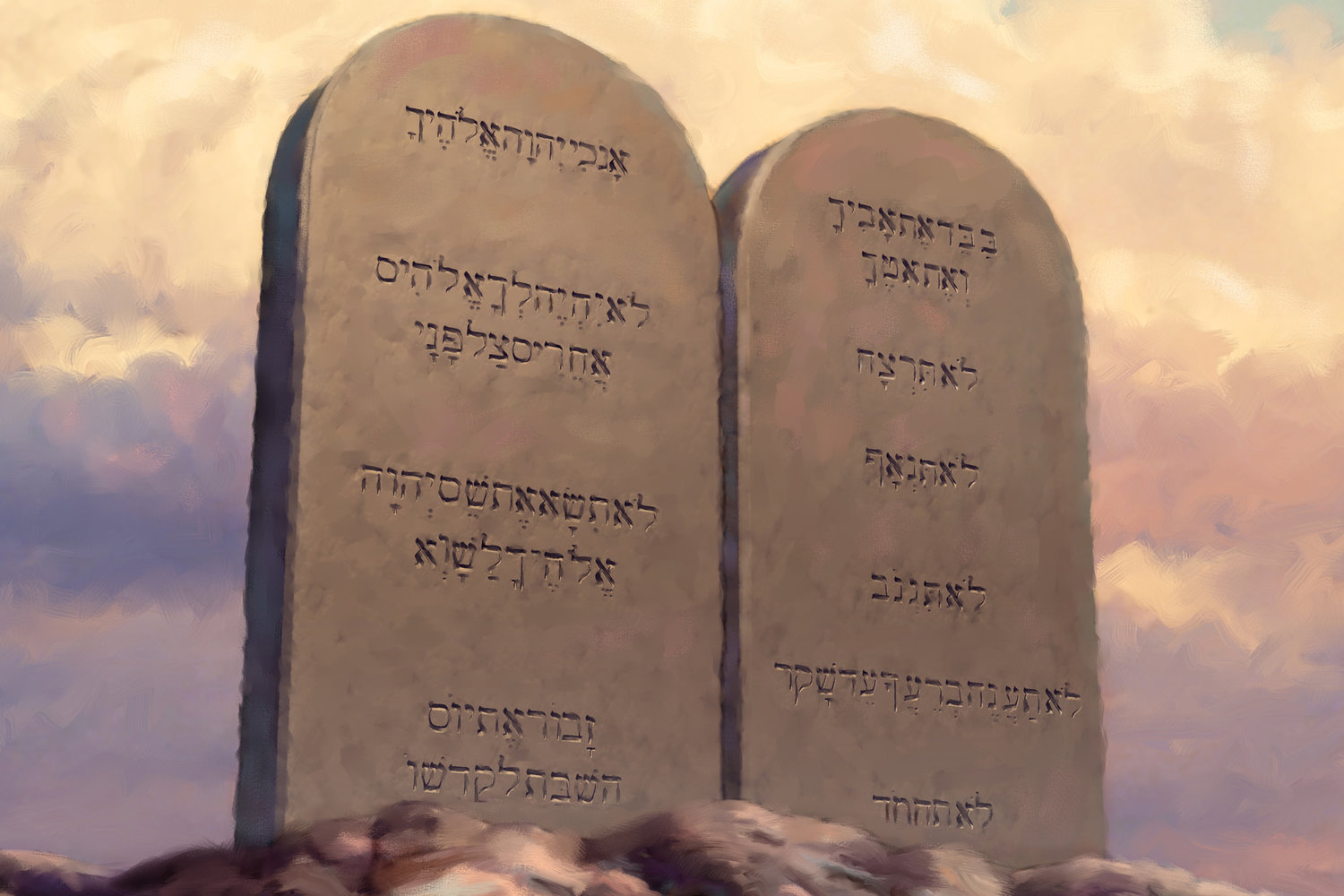
10. What are the words of God’s everlasting covenant? The words of God’s everlasting covenant are the words of the Ten Commandments.
11. According to Hebrews 8, what was the matter with the Old (“first”) Covenant? The words of the covenant were not the problem; the people were the problem.
12. If the Sabbath was part of the Old Covenant made at Sinai and subsequently broken, does it have any part in the New Covenant? Yes, the 7th day Sabbath is also part of the New Covenant for the “words” of the covenant are the same as those of the Old – rather it was the promisor who changed.
13. In the new, everlasting covenant who took on himself the obligation to fulfill all the Ten Commandments? Jesus.
14. How does the weekly Sabbath continually remind us of God’s covenant? The weekly Sabbath reminds us that in six literal days God created our environment & made the seventh day as a special time for us to know God better & for our sanctification.
15. Besides reminding us of our creation and sanctification of what else does the weekly sabbath remind us? The weekly Sabbath appearing in the center of God’s covenant points to our spiritual rest in Christ’s finished work for our salvation & to the future eternal rest that all will enjoy who remain in God’s covenant.
The Everlasting Sabbath (Gen. 2:1-3; Ex. 16:27-30; 20:1-17; 31:16-17; Isa. 56:3-7; 66:22-23; Eze. 20:20; Mark 2:27)
16. What common factor does God give both in Genesis 2 and Exodus 31 that makes the 7th day Sabbath a special day? That it is a sanctified day in which God pledges to make his people holy.
17. How does the Bible make clear that the Sabbath was God’s special sign for all humanity long before the Ten Commandments were given on Mount Sinai? By the fact that God made it holy & blessed at creation, by the statement of Jesus that it was “made for mankind,” & by the fact that God gave detailed instructions regarding it when he provided mana before the Israelites arrived at Mount Sinai.
18. How does Isaiah illustrate the entering into God’s covenant? Isaiah equates keeping the Sabbath with entering into God’s covenant.
19. As God’s pledge that he will fulfill his promises to us and our pledge of loyalty to him, how long will the Sabbath continue? Throughout eternity.
by Rick Marin | May 20, 2021 | Covenants
Are there conditions for being included in God’s covenant of grace?
(Jer. 31:3; Matt. 5:17-19; 22:35-40; Rom. 5:5; 13:10; Heb. 2:9-10; 1 John 4:16-17) Blog May 16-22, 2021
Prepared by Richard A. Marin: Present Truth PO Box 700, Fallbrook CA 92088-0700 USA
REVIEW: God bases his lasting relationship with his people on a covenant. First, he makes a proposal and after a period of time enters into a covenant with them. When Adam broke God’s covenant with humanity, God immediately offered a new covenant for our redemption. This covenant, like those made with Noah, Abraham, and David, were given by grace and the blessings offered are received by faith alone. The covenant God made with Israel at Sinai, like that made with Adam before the fall, was based on human performance.
Motives (Gen. 3:1-5; Ex. 19:5; Josh. 9:3-15; Jer. 31:3; Matt. 22:35-40; Rom. 13:10; 2 Cor. 11:1-3)
1. What are true motives for proposing and forming a covenant? True motives for proposing & forming a covenant are mutual attraction, love, a desire to benefit the other party and/or the desire for mutual benefit.
2. What are false motives for prosing or making a covenant? False motives for proposing or making a covenant are the desire to dominate the other party or to take advantage of or mistreat the other party.
3. What method is generally used in order to make an inappropriate covenant? Deception.
4. Give Bible examples of when deception was used in order to make an inappropriate covenant: Lucifer used deception to beguile Eve in the Garden of Eden & the Gibeonites used deception to exact a covenant from Joshua & the leaders of Israel.
5. What was God’s motive for proposing and seeking a covenant with humanity? Love.
6. According to Jesus where is love most perfectly defined? In the Ten Commandments.
7. According to Paul where is love most perfectly defined? In the Ten Commandments.
8. How are the Ten Commandments related to all God’s covenants? The Ten Commandments are the underlying basis & wording of God’s covenants with the human race.
Obligatory Covenants (Matt. 5:48; John 1:17; Rom. 3:20; 5:12-19; 2 Cor. 9:8; 1 John 4:16-17)
9. If God’s covenant with his people is based on our obedience to the Ten Commandments what is the result? We fail miserably & break the covenant just as Israel did at Sinai.
10. What has God done in order that we may be included in all his covenant promises. God has given us a new Federal Representative in place of Adam & in our place (as our vicarious Substitute) he has fulfilled every obligation outlined in the Ten Commandments.
11. For whom did Jesus fulfill all the demands of God’s everlasting covenant? For everyone found in him.
12. How can I be found in Christ so as to be included in all the blessings of God’s everlasting covenant? By believing in him as your Lord & Saviour.
13. What hope of eternal life do we have on the basis of our being loving like God? None, for “by the deeds of the Law [love] there shall no flesh be justified in his sight.”
14. Could God have changed his Law in order to receive us in our fallen condition? No, for God is LOVE & since he is unchangeable & his Law is but an expression of who he is then it would be impossible to change his Law in order to receive us in our fallen condition.
A Law of Love (Matt. 5:17-19; Rom. 5:5; Heb. 2:9-10)
15. If Jesus perfectly fulfilled the Law in my place why should I have any interest in keeping the Ten Commandments? You will not likely have any desire to keep the Ten Commandments if you have not trusted in him as your Lord & Saviour, but if you have accepted him as your Substitute & Surety before God, you will love him for what he has done for you & that love will express itself in obedience to all his Commandments. Why would a person want to hurt the one who had suffered & bled, sacrificing life itself for their redemption? Jesus paid the bride price before the marriage that we might enter into a loving covenant with him.
16. For what reason might unbelievers desire to keep God’s commandments? Unbelievers might desire to keep God’s Commandments in order to receive his temporal blessings of health, happiness, & harmony with society & in the home
17. If love is what God is and what he wants us to be, how are we to attain that goal? When we believe in Jesus, we are given the Holy Spirit who places love in our hearts & continually works with us to increase that love. This work continues until the Spirit’s final work of glorification fits us to lovingly live in God’s presence forever.
18. What should be our attitude to the obligations mentioned in God’s covenant? We, like David should proclaim, “Oh how I love thy Law; it is my meditation day and night.” God’s every command is a glorious promise that he will fulfill in us if we cooperate with him.
19. Can we conclude that there are no conditions for being included in God’s covenant of grace? No, there is one condition & that is faith in Jesus for to him were all God’s promises made & in him they are Yeah & Amen.
